The original newspaper of "Morning Bell" made its first public appearance, and the red sound of "Morning Bell" reappeared forever.
Morning bell
Core reading
As one of the founders of the Communist Party of China (CPC), the early organizer and leader of Shandong Party organization, Wang Jinmei made outstanding contributions to the Party’s revolutionary activities in the early days of the founding of the Party. Morning Bell and Morning Bell Weekly Supplement were his early progressive newspapers. Recently, Shandong Museum published the original precious cultural relics of these two newspapers for the first time, which is of great significance to the study of revolutionary cultural relics in our province and provides more historical basis for the study of Shandong Party history and Wang Jinmei.
In Wang Jinmei’s short and glorious life, almost all of his revolutionary struggle career was spent in Shandong. During this period, he gave full play to his strengths, founded progressive newspapers such as Lixin and Morning Bell, wrote articles, explored and disseminated revolutionary ideas, and was the earliest advanced intellectual in Shandong who studied and disseminated Marxism. After attending the First Congress of the Communist Party of China and witnessing the founding of the Communist Party of China (CPC), Wang Jinmei went deep into the workers’ masses, developed the Party organization and opened up the position of the labor movement in the arduous current situation, and led the vigorous workers’ revolutionary movement in theory and action. He was the earliest pioneer and leader of the Shandong workers’ movement.
Unfortunately, because of the age and the cruelty of the struggle situation, the revolutionary cultural relics about Wang Jinmei are rare. On the occasion of celebrating the 73rd anniversary of the founding of New China, the Shandong Museum announced for the first time the early revolutionary cultural relics related to Wang Jinmei — — The original of Morning Bell and Morning Bell Weekly Supplement.
The wooden header impression of Morning Bell
Rare and precious cultural relics, a great harvest of revolutionary cultural relics in Shandong Province
"The original newspapers of Morning Bell and Morning Bell Weekly Supplement were discovered in the general survey of cultural relics a few years ago. After several years of careful restoration, they are now officially announced. A total of one newspaper, Morning Bell Daily, and three copies of Morning Bell Weekly Supplement were found, which have been lost for a long time and edited by Wang Jinmei, and are extremely rare and precious revolutionary cultural relics. "Morning Bell Sunday Supplement" has been rated as a national second-class cultural relic. " Li Heng, director of the Revolutionary Cultural Relics Department of Shandong Museum, told the reporter that the discovery of these newspapers made her and her colleagues very excited. This is a discovery to fill the gap and a major gain in the latest discovery and research of revolutionary cultural relics in our province.
Morning Bell Weekly Supplement
Wang Jinmei is one of the founders of the Communist Party of China (CPC), the organizer and leader of Shandong Party organization. In order to spread revolutionary ideas, Wang Jinmei devoted a lot of energy to running newspapers and periodicals. He has run Lixin, Jinan Labor Weekly and Shandong Labor Weekly with Xiangqian Wang and Deng Enming. After that, he co-founded Morning Bell and Modern Youth.
According to reports, Morning Bell was founded in 1923, with the promotion of the Jinan branch of the CPC at that time, it was founded by Ru Zhongwen, the foreman of Luokou in Jinan Telephone Bureau. The newspaper named "Morning Bell" is the idea of running the newspaper in Beiping, which is intended to awaken the people and inspire the struggle. At that time, Li Rongfu was the first president, and Ru Zhongwen was the head of business and fund-raising. Both of them were progressives. During the May 4th Movement, Wang Jinmei got acquainted with the two men, and The Morning Bell was also strongly supported by the Jinan Branch of the Communist Party of China. In 1922, the Jinan Branch of the Communist Party of China was established, and Xiangqian Wang was responsible for organizing the work, leading the Party’s work in Jinan together with Wang Jinmei and Deng Enming. In 1923, Morning Bell also invited Xiangqian Wang as the chief editor, Wang Jinmei, Wang Yongzhang and other communist party people as the main editors, which made the newspaper have distinctive revolutionary characteristics and was a powerful position for Jinan’s revolutionary propaganda.
"Turn words into weapons and call on the people to inspire them"
The first issue of Morning Bell was officially published on August 2, 1923, with four editions, printed by Jinan Tongxing Printing House, and 600 copies were issued every day. At this time, it was on the eve of the great revolution when the Kuomintang and the Communist Party cooperated for the first time. According to Ru Zhongwen’s recollection, there is a special sentence in the inaugural speech of Morning Bell: "Jinan speaks for the people!" This sentence tells the special attributes of this newspaper, and also tells the voice of Jinan people with revolutionary consciousness at that time.
Wang Jinmei wrote a large number of commentary articles in the weekly supplement of the newspaper, such as "Inch Iron" monograph and miscellaneous essays, and took part in various trivial matters such as newspaper typesetting, printing, distribution and sales. While he and Xiangqian Wang and others went deep into the grass-roots leaders to launch the workers’ movement and struggle, they never forgot to put pen to paper on the ideological and public opinion front, and put the analysis of the current situation and revolutionary thoughts into popular newspapers and periodicals, turning words into weapons, calling on the people and inspiring them. "At that time, Wang Jinmei spent a lot of effort to run Morning Bell. In addition to writing and editing newspapers in person, I sometimes go to the printing factory to participate in printing work at night, and I also help to send printed newspapers to the post office for distribution during the day, and sometimes I even go to the streets to sell newspapers in person. It can be said that I have paid a comprehensive and hard work for this newspaper, "Li Heng introduced.
With the help of these excellent early communist party people, Morning Bell survived tenaciously in the complicated and sinister political situation at the beginning of the founding of the Party. Xiangqian Wang, the chief editor of the newspaper, mentioned in his resume in 1950 that the newspaper "is a small popular newspaper, but it pays attention to political and social issues and does not adopt a vulgar style of interest. After Wang Jinmei took part in the leadership, it promoted the party more often. At that time, Shandong was the only progressive speech … …”
The Morning Bell Weekly Supplement is the true purpose of the newspaper.
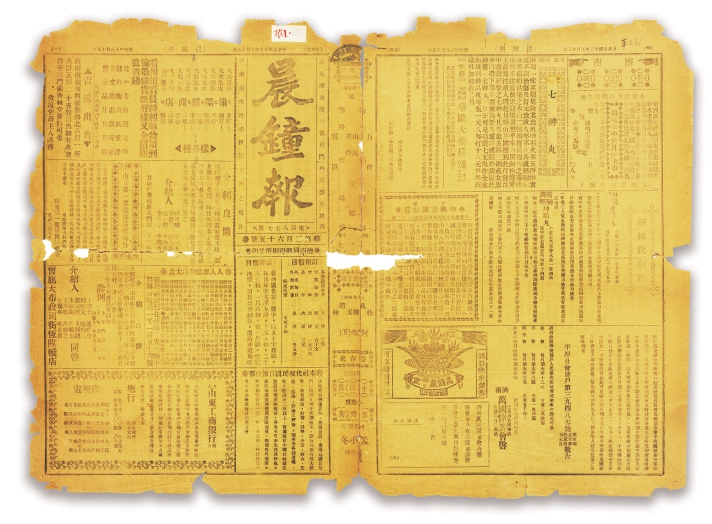
Li Heng told reporters that the newly discovered Morning Bell was originally a four-page tabloid, and its publication date was Saturday, September 13th, 1924, which was the Mid-Autumn Festival on August 15th of the lunar calendar, No.265. The address below the headline was "West of Bell Lane outside Plymen, a commercial port in Jinan", and the headline was also marked "Chunghwa Post was specially registered to set up a voucher.
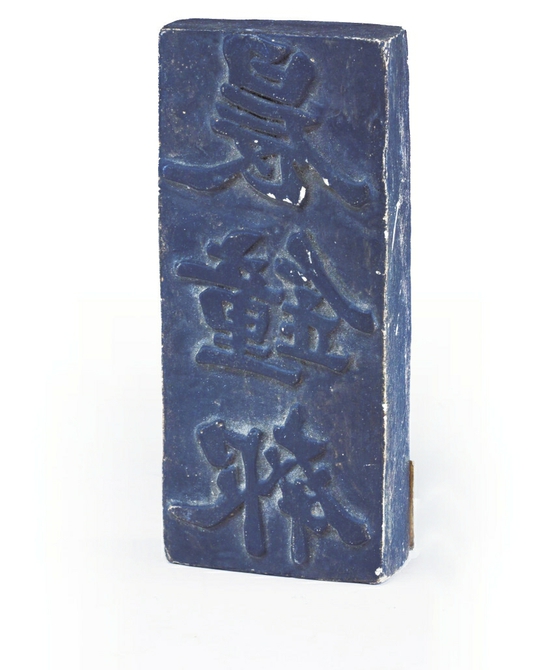
"It is particularly important to note that the headline of this newspaper ‘ Morning Bell ’ The three characters are completely corresponding to the wooden header impression collected in our museum. They are both Wei Bei fonts with correct atmosphere, and the font size and spacing are also completely consistent. It also proves that this impression, which is designated as a national first-class cultural relic, is the original head impression of Morning Bell, and its cultural relic value, especially the revolutionary cultural relic value, is extremely high. " Li Heng also introduced that most of the contents published in this newspaper are related to Jinan, among which most of the front pages are all kinds of advertisements in Jinan. The rich and varied forms of advertisements and promotional texts disguise the newspaper as a popular tabloid, and the front and back seams also publish life categories such as theater play announcements, local food prices, train departure times, and guess-and-guess lottery tickets, etc., from which we can also get a general understanding of the prosperity of the streets in the commercial port city of Jinan at that time.
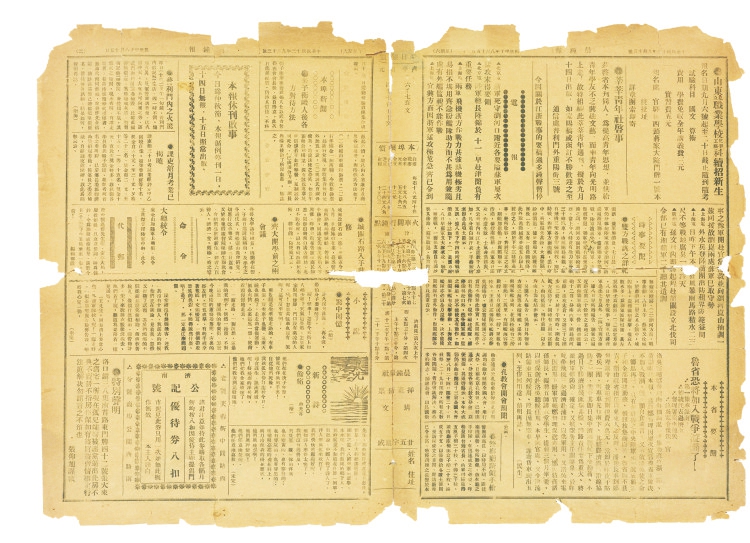
From the articles published in this newspaper, it can be clearly seen that in order to avoid the sight of the reactionary warlords of the authorities and survive, Morning Bell deliberately published all kinds of advertisements on the conspicuous front page and the fourth edition, and typeset the telegrams, social news and new poems and novels of warlords at that time in the second and third editions on the opposite side, and there was no obvious progressive ideological title and the text content of the struggle of the workers and the masses.
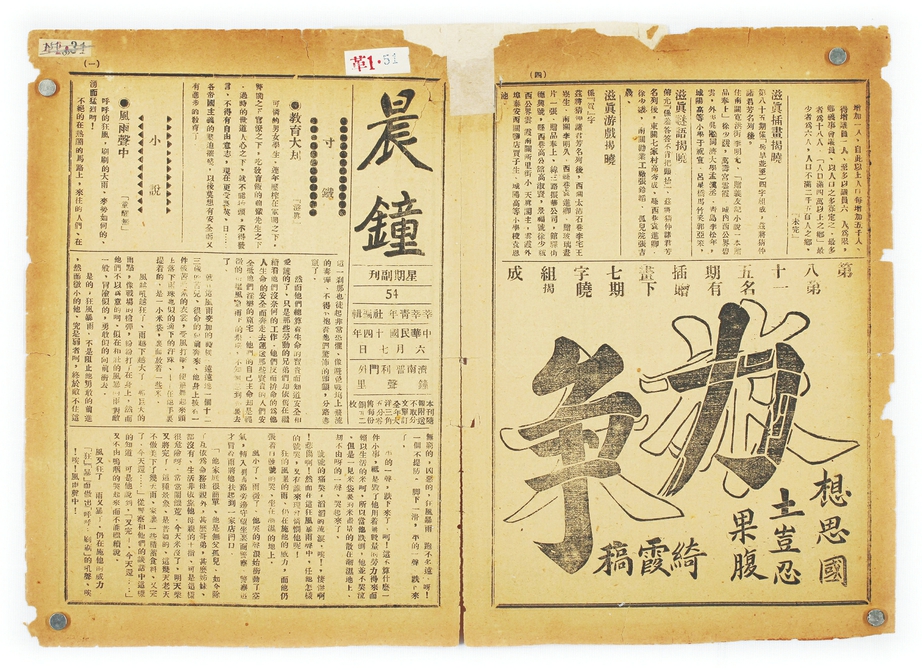
A careful examination of the contents of the three newly discovered Morning Bell Weekly Supplement shows that the key propaganda contents of the progressive revolution are all put on the supplement attached to the main issue, so that we can appreciate the good intentions of the revolutionaries who run the newspaper.
Morning Bell began to issue a weekly supplement shortly after its publication. There are main columns on the page, such as speech ("too tight"), literature and art, science, new poetry, novels, miscellaneous feelings, communication, poetry, art, illustration, etc. The style is mainly written, with new punctuation added. At that time, most of the people who contributed to the supplement were thoughtful young people and scholars.
The purpose and running concept of Morning Bell Weekly Supplement are "the masses, unity, hard work, reform" and "struggle, sacrifice, equality and freedom". It mainly publishes new-style poems, propagandizes new educational ideas, introduces western legal thoughts and changes in the life of new youth, and many editorials and important articles written by Wang Jinmei and Zhang Shizhai are mainly published in the supplement. By analyzing the contents of three copies of Morning Bell Weekly Supplement, we can know that although the supplement is an accessory of Morning Bell, it is the true purpose of this progressive newspaper, and all the styles published on it show the progressive thoughts of attacking reality, inspiring youth and awakening people’s wisdom.
One of the important revolutionary remains of Wang Jinmei.
"At that time, this newspaper played a very important propaganda role in the revolutionary struggle in Jinan and Shandong. Wang Jinmei published many editorials and important articles in this newspaper. In addition, the newspaper also reported a large number of revolutionary struggles carried out by workers and people from all walks of life at that time, and actively carried out anti-imperialist and anti-feudal propaganda. All these made Zhang Zongchang, the feudal warlord who was in charge of Shandong at that time, very afraid, because the influence of Morning Bell was growing among the people. Therefore, he sent military police to the newspaper several times to find trouble. In order to maintain its publication, the newspaper was forced to move three times and was finally sealed up by the Zhang Zongchang authorities on August 15, 1925. " Li Heng said that although the Morning Bell was founded only two years ago, its influence on the people at that time and its role in communist party people’s propaganda of revolutionary ideas and mobilization of the masses were enormous.
The morning bell, second and third edition
However, the Shandong Museum is also worried, because these newspapers have been circulated for nearly a hundred years, and due to the quality of paper used at that time, the newspapers are in a worrying situation, and almost all the quartzite papers are brittle and broken. Therefore, they have been listed as special urgent restoration cultural relics to be protected.
Speaking of the discovery of Morning Bell and Morning Bell Weekly Supplement, we should also focus on the wooden header impression of Morning Bell. This cultural relic is a cuboid, made of wood, and the front is engraved with three traditional characters of "Morning Bell Newspaper" in traditional Yang language from top to bottom. It is a very precious revolutionary cultural relic. This cultural relic was donated by Ru Zhongwen, the first president of Morning Bell, which shows the clear spreading history of this revolutionary cultural relic. At the same time, it has also become the best material evidence to prove that Wang Jinmei, Xiangqian Wang and other revolutionary ancestors used pens instead of guns to carry out revolutionary struggles.
According to the uninterrupted calculation, the Morning Bell has issued tens of thousands of copies from its inception to its closure, but there has been no physical circulation in China, and there is no news of collection from any public or private organization. From this, we can see the rarity of the Morning Bell, and it also shows that this early revolutionary newspaper is rare and rare, and it is a revolutionary cultural relic and revolutionary document worth cherishing.
Morning Bell Newspaper and Morning Bell Weekly Supplement are the "revolutionary positions" where Wang Jinmei led the workers’ revolutionary movement with pen instead of pen in the early days of the founding of the Party, and they are very important revolutionary historical witnesses. Perhaps coincidentally, the Morning Bell and Wang Jinmei have almost synchronous fate: on August 19th, four days after the final publication of Morning Bell, Wang Jinmei died of a serious illness in Qingdao at the age of 27.
Wang Jinmei’s revolutionary thought, like the "bell" issued by Morning Bell, alerted many students, intellectuals and workers from all walks of life at that time, and urged them to realize their thoughts and embark on the road of revolution.
Several copies of "Morning Bell" and "Morning Bell Weekly Supplement" add heavyweight material evidence to the revolutionary relics of Wang Jinmei, an important figure in the Communist Party of China (CPC)’s party building, which is of great value and significance; At the same time, it is also a very important revolutionary relic discovered so far about Wang Jinmei himself. Therefore, studying the early revolutionary history of Jinan City and Shandong Province has added more direct and powerful revolutionary cultural relics. For a more comprehensive understanding and study of the early revolutionary history of the Communist Party of China, Morning Bell and Morning Bell Weekly Supplement are precious revolutionary cultural relics and documents.
(All photos in this group are courtesy of Shandong Museum)