5G technology has been replaced! The 5G mobile phone you just bought will be eliminated immediately? no
[PConline gossip] Maybe you are still using a 4G mobile phone, but 5G has been quietly replaced.
A few days ago,The international version organization 3GPP announced the R16 version freeze, marking the completion of the first evolution version of 5G..
This is the first evolution version of 5G after the first version R15 of 5G.
▲30 seconds to understand Release-16(R16)
Q:What is Release-16(R16)?
A:R16 version is the first evolution version of the 5G standard after R15 established the 5G standard, which sets clear goals and implementation plans for the future 5G technology.
Q:What changes and upgrades have been made to Release-16(R16)?
A:Compared with the R15 version, the R16 version is mainly upgraded to six aspects. Among them, there are two aspects that directly affect consumers: positioning enhancement and power-saving application; The other four aspects focus on industrial internet, 5G intelligent transportation and related technologies to enhance 5G coverage.
Q:Release-16(R16) is here. Do you want to change your mobile phone?
A:There is no need to change the mobile phone, and the current mobile phone can also be "upgraded".
What is the R16 version?
3GPP uses the "Releases" naming system to provide a stable platform for developers to realize their functions at a certain moment. That is to say, when a version of "Release" is officially "frozen", this version will be formally established and will not be changed, and the future 5G technology will be built according to this version.

The 5G network we are currently using is based on the Release-15 version. As the first stage of the 5G specification, Release-15 has set a goal to adapt to the early commercial deployment. Release-16(R16) is the first evolution version after Release-15. That is to say, after the R15 NR NSA version was frozen in 2017, the 5G version ushered in a "replacement".
Will the current 5G mobile phone be out of date?
There may be questions here. After the R16 version comes out, does it mean that the R15 version of the 5G mobile phone is out of date, and the newly bought 5G mobile phone will soon be out of date? That’s not true.
There is no need to change the mobile phone, and the 5G mobile phone will become more and more easy to use.
As mentioned earlier, "Releases" is established so that developers can realize functions at a certain moment, in other words, it is just a "goal". The R15 version solves the problem of "whether there is or not" of 5G technology. The R16 version plans the goal of "better use and easier use" of 5G technology.But also on the basis of R15.

Therefore,The current 5G mobile phone is still compatible with R16 version.And with the R16 version enhancing the basic functions of the R15 version, users can complete the update through system upgrade.In the future, 5G networks will have better signals, and 5G mobile phones will save more power.
▲What upgrades did R16 bring?
The most remarkable enhancements of R16 are multi-input, multi-output (MIMO) and beamforming enhancement, dynamic spectrum sharing (DSS), dual connection (DC) and carrier aggregation (CA), and power saving of user equipment (UE).
At present, the upgrade direction of R16 version is roughly as follows:
Access and backhaul integrated network (IAB)5G NR unlicensed spectrum (NR-U)Industrial internet of things (IIoT) and ultra-reliable low-delay communication (URLLC)Intelligent Transportation System (ITS) and Vehicle-to-Vehicle (V2X) CommunicationEnhance positioning and save more electricity.
Because the above aspects involve the knowledge of "hard core", we mainly choose several functions that have great influence, and what images R16 brings to the general mobile phone users and the industry.
For mobile phone users
▲Enhance positioning, indoor navigation is coming.
For many years, the positioning of mobile terminals has been accomplished by navigation satellite systems such as GPS with the assistance of cellular networks. This method can provide accurate positioning, but it also has disadvantages: it is limited to outdoor areas with high satellite visibility.

Indoor navigation and positioning are still the "pain points" for mobile phone users.In version R16, the positioning enhancement function is proposed. R16 version supports multi/single cell location and terminal-based location., a new positioning reference signal (PRS) is defined, which can be applied to various 5G positioning technologies such as round trip time (RTT), angle of arrival/departure (AoA/AoD), time difference of arrival (TDOA), etc.
R16 enhanced positioningIt is expected to meet the accuracy requirements of indoor 3 meters and outdoor 10 meters.The indoor navigation that Apple can’t solve is finally hopeful.
▲More power saving: comparable to 4G battery life
It is well known that the battery life of 5G mobile phones has collapsed, and R16 has developed a new technology to solve this problem.


Many mobile phones have added the function of automatically switching LTE to save power.
It is understood that R16 is optimized for the high power consumption of 5G terminals. By introducing wake-up signal, enhancing cross-slot scheduling, adaptive MIMO layer number, UE power saving auxiliary information, etc., the power consumption is reduced, so that in the case of greater speed and data volume,Make 5G have power consumption close to 4 G..
By then,Users do not need to replace the existing 5G mobile phones and other equipment, but only need to update the system software to enjoy the new upgrade brought by R16 version.
For vertical fields
The R15 standard has been able to meet the vast majority of consumer-grade 5G requirements, so more upgrades of R16 are reflected in the vertical field, that is, industrial applications.
▲Integrated access backhaul network (IAB)
Full name of integrated access backhaul network (IAB)Integrated Access BackhaulThe name is a bit awkward to read, in fact it is not difficult to understand.
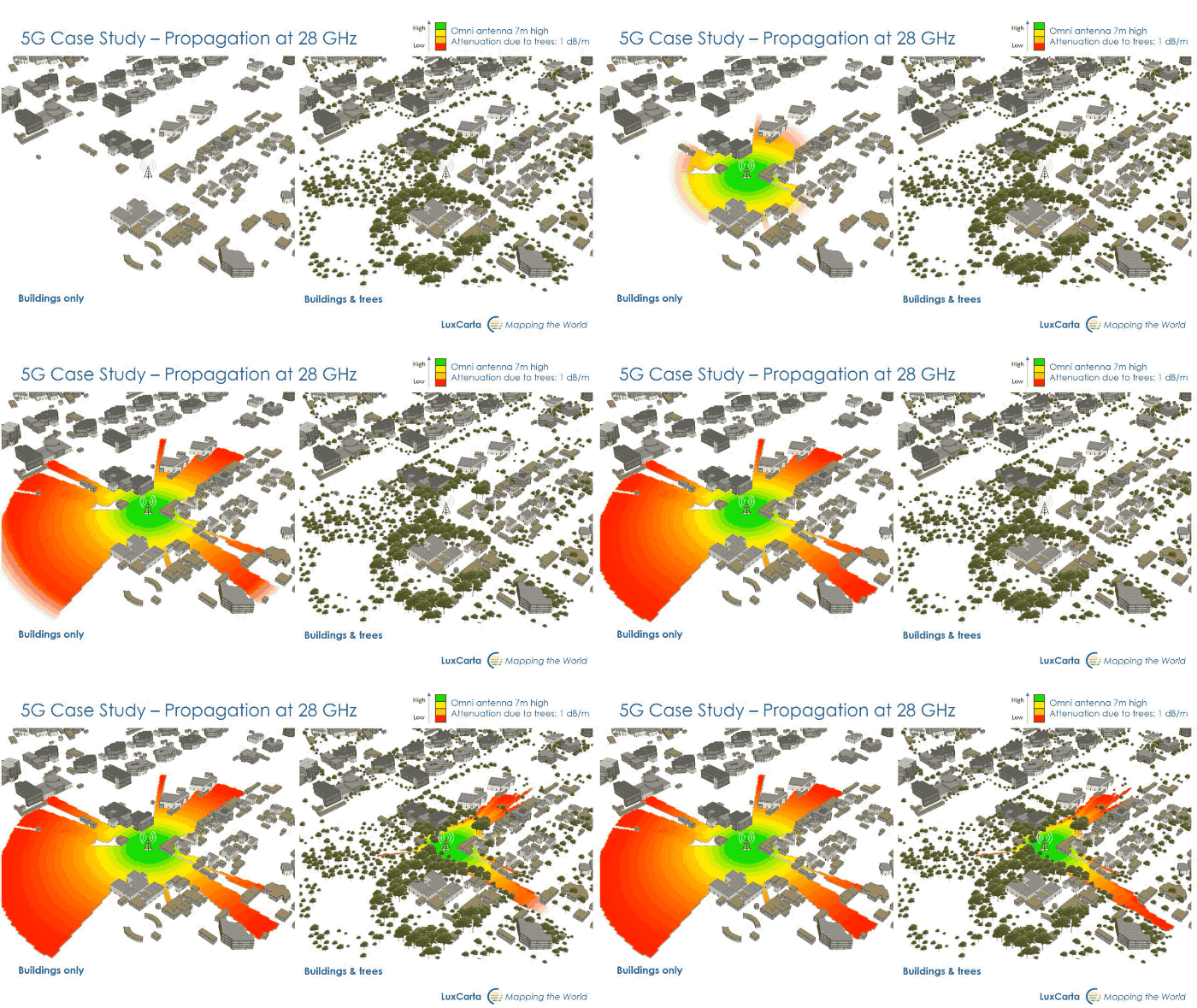
IAB is regarded as an important technology for the popularization of 5G, which canDeploy 5G at a lower cost and in a simpler way where optical fiber cannot be laid..

If the implementation is a bit like we use multiple routers to build a network and cover the places where there is no signal by wireless bridging. That’s good to understand.

In theory, as long as there is electricity, IAB technology can make 5G technology cover more places.. For example, cover 5G on islands, mountains or sparsely populated places, or cover 5G on some protected buildings and scenic spots to reduce the construction cost and damage caused by laying lines.
▲5G NR unlicensed spectrum (NR-U)
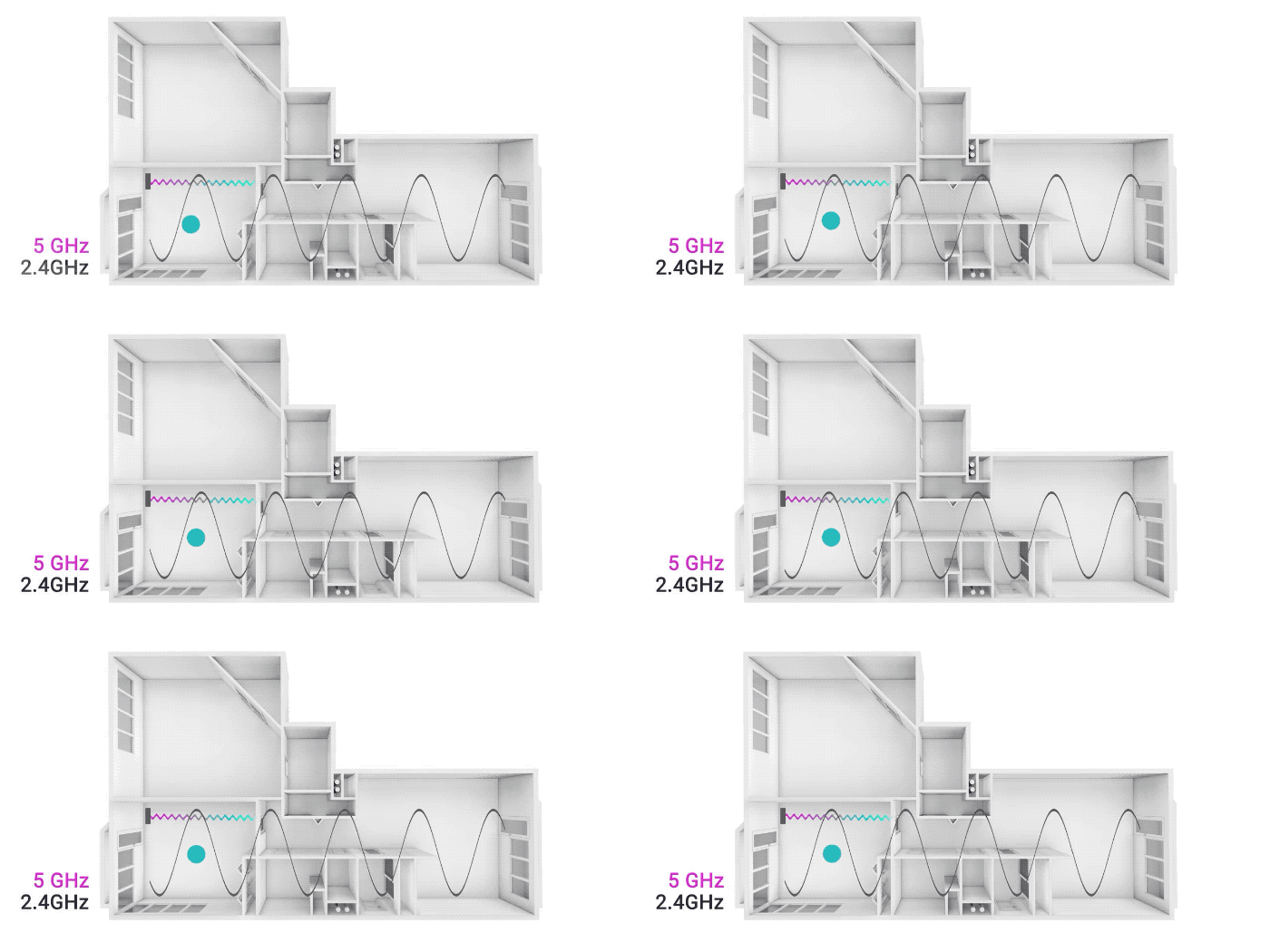
We know that the mainstream 5G technology is based on Sub-6GHz band and mmWave millimeter wave band, and 5G NR unlicensed spectrum (NR-U) can use unlicensed spectrum to enhance the 5G experience.
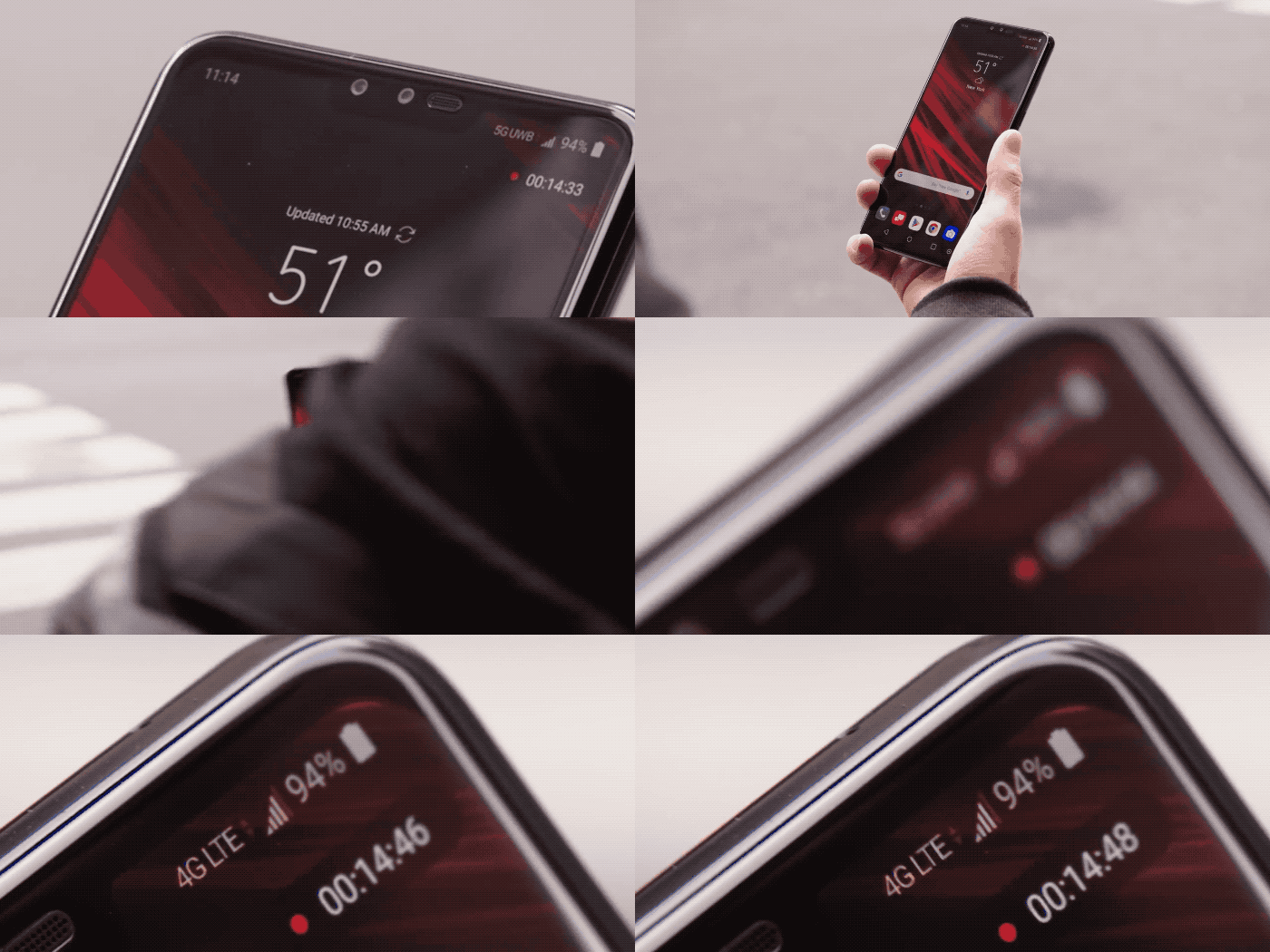
Millimeter wave 5G signal is often criticized.
There are roughly two directions for implementation:
1、Grant-assisted access (LAA),Unauthorized spectrum can be used for 5G carrier aggregation to increase 5G bandwidth;2、Independent NR-U,By independently deploying 5G networks in unlicensed spectrum, operators, enterprises and factories can build their own 5G private networks, thus realizing a wireless network with high throughput and low delay. It is envisaged that NR-U can even "replace" Wi-Fi technology in the future.
However, because the frequency band resources are partly in the hands of relevant institutions, the auction price of frequency band and the allocation of frequency band resources may become obstacles to the development of NR-U.
▲Industrial internet of things (IIoT) and ultra-reliable low-delay communication (URLLC)
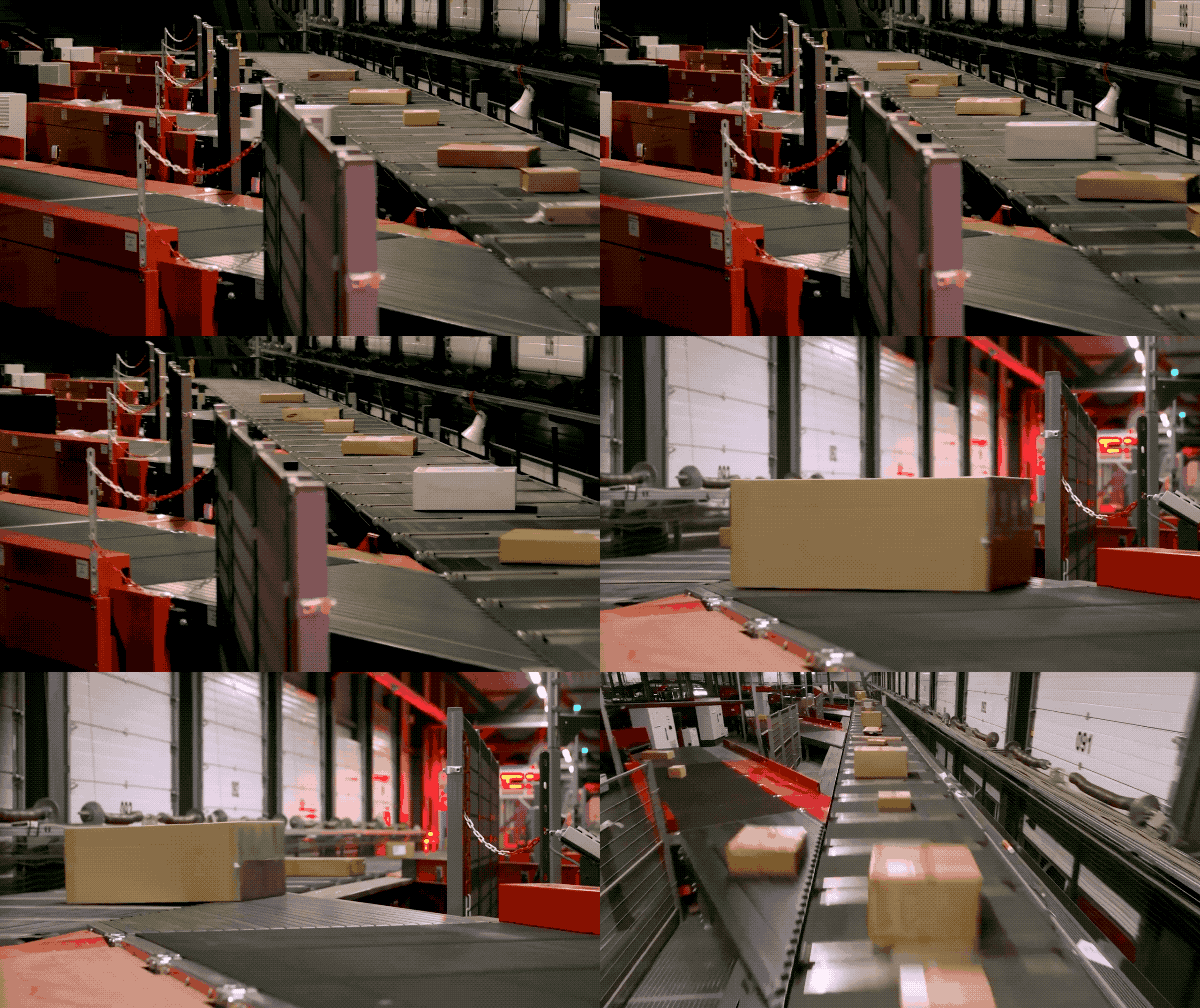
In addition to NR-U’s help to industrial Internet, R16 puts forward stricter reliability requirements (up to 99.9999% reliability) while maintaining millisecond delay.

It is understood that R16 version introduces new technology, which supports 1 microsecond synchronization accuracy, 0.5-1 millisecond air interface delay, "six nines" reliability and flexible terminal group management, and can achieve end-to-end delay within 5 milliseconds and higher reliability at the earliest, providing support for industrial-grade time sensitivity.
▲Intelligent Transportation System (ITS) and Vehicle-to-Vehicle (V2X) Communication
Another major vertical focus of R16 is the development of intelligent transportation.
The solution of intelligent transportation system proposed in R16 version aims at improving traffic safety and reducing traffic congestion, fuel consumption and environmental impact. With 5G technology, cities will have more flexible traffic dispatching functions.

In order to promote the development of ITS, not only the communication between vehicles and fixed infrastructure, but also the communication between vehicles is needed. At present, the direct communication between V2V (vehicle-to-vehicle) and V2I (vehicle-to-roadside unit) is supported, which can realize the functions of vehicle formation, semi-automatic driving and remote driving.
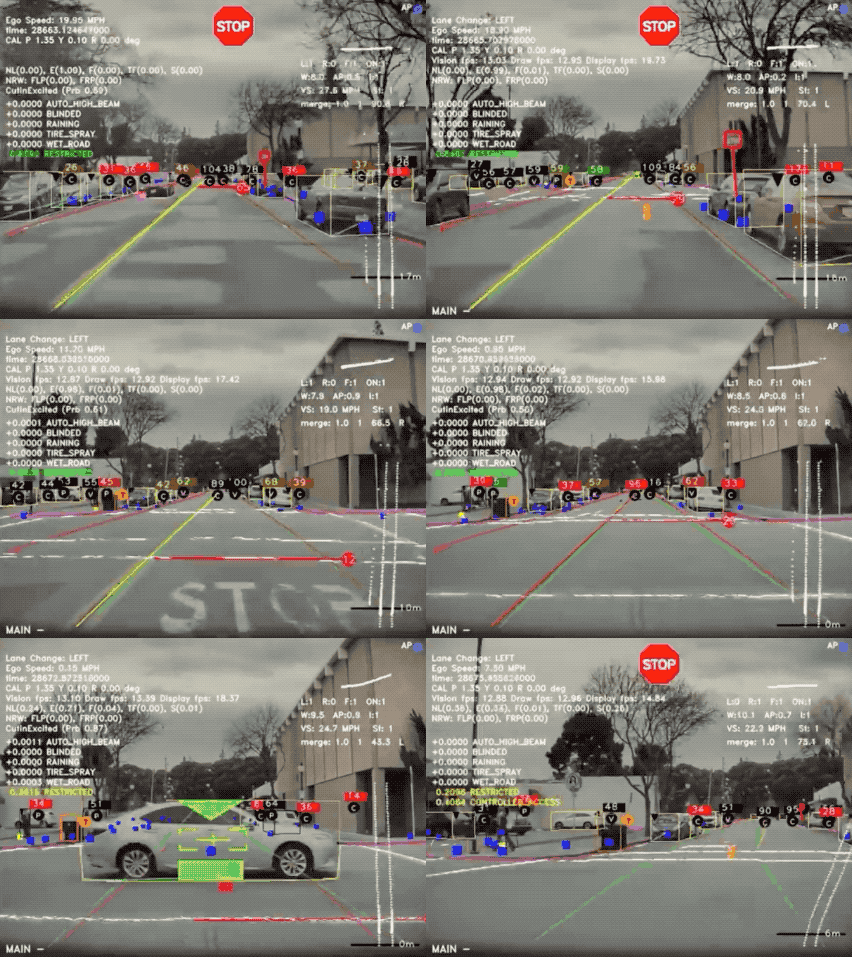
5G will help autonomous driving
In short, version R16 definesHow will 5G reduce traffic jams and pave the way for L5 autonomous driving?.
The 5R16 version makes the 5G technologyThe application becomes wider.In the R15 stage, our feelings about 5G may only be that the network speed is faster and the mobile phone consumes more power. And when the R16 version really landed,With better network coverage, more convenient indoor navigation and autonomous driving technology, 5G technology is really "perceptive".
R17 of "Hanging" Star Chain is on its way.
In addition to the outlook for the R16 version, with the official freezing of the R16 version,R17 version was officially put on the agenda.

According to the evolution diagram of 3GPP, the first phase of 5R17 versioning was started in the second quarter of this year.It is estimated that the freezing can be completed in the third quarter of 2021 at the earliest..

The main upgrade of R17 is proposed around the 5G standard.MMTC (Mass Machine Communication)), in addition to the conventional speed and frequency band coverage upgrade,Version R17 will support more devices and use 5G networks in more areas.
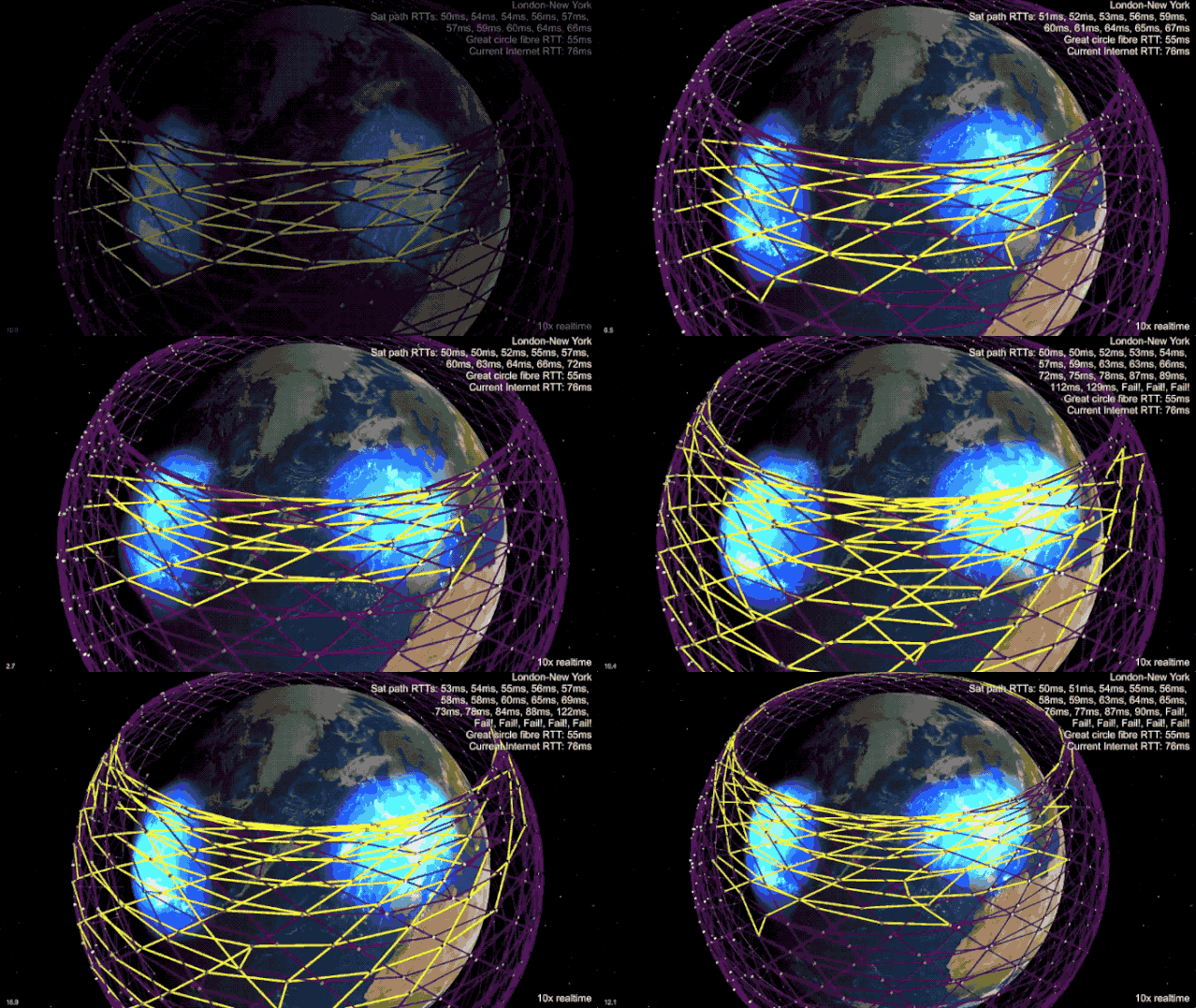
Among them, the non-terrestrial network NR has attracted much attention.It means that future 5G base stations can be deployed on satellites., realize satellite 5G communication by hanging the base station;And an air-to-air base station, which uses the ground base station to cover the flight route..
According to the data of ICAO, China Mobile will adopt the hybrid networking mode of ground-to-air base station coverage and satellite coverage.At present, 52 base stations have been built in Beijing-Shanghai, Beijing-Guangzhou and Beijing-Chengdu routes, and more than 400 test flights have been completed, with a total bandwidth of 45-75Mbps/ frame.
China Mobile plans to complete the smooth upgrade from ground-to-air communication 1.0 to ground-to-air communication 2.0 by the end of 2022, providing a super fiber access experience.

With R17 further improving the application of 5G networks in off-ground scenes, it is believed that it will be possible to enjoy high-speed 5G networks anytime and anywhere in the near future.
Conclusion: 5G only shows the tip of the iceberg.
I often feel that media propaganda is too optimistic about 5G technology. After all, the first standard of 5G has been frozen for three years. The three "big cakes", eMBB (high bandwidth), uRLLC (low latency) and mMTC (Internet of Things), which were originally "painted", have only achieved the first one, while the latter two continue to be the promotion targets among R16 and R17.

However, from another perspective, the promotion of 5G seems to be faster than expected-5 G networks have mobile phones; There are many choices for 5G mobile phones within 2000 yuan. These trends are telling us that although the 5G standard is still improving, 5G has indeed changed from "usable" to "easy to use"; 5G mobile phones that can only "run a point" have also become "really fragrant" in cloud games and watching 8K HD videos. There is more to explore in the 5G that reveals the tip of the iceberg.
Reporting/feedback