The Three Kingdoms of Hengshan Glory: The brilliance of benevolence and righteousness is shining.
At the end of 1991, Tokyo TV adapted the famous Japanese cartoonist Yokoyama Mitsuteru’s classic "The History of the Three Kingdoms" into an animated film, and directly named it "The History of the Three Kingdoms with Glory in Hengshan", which was the first animation series of the Three Kingdoms. "The History of the Three Kingdoms" is a comic series of "The History of the Three Kingdoms" based on China’s classic "The Romance of the Three Kingdoms" since 1971 by Yokoyama Mitsuteru. Since its birth, its circulation has exceeded 100 million copies. This work is also the origin of ACG’s Three Kingdoms culture, which is influenced by the glorious Three Kingdoms Series, Ying Jie Biography Series, True Three Kingdoms Unparalleled Series, Capcom FC Swallowing Heaven and Earth, and arcade The Three Kingdoms.
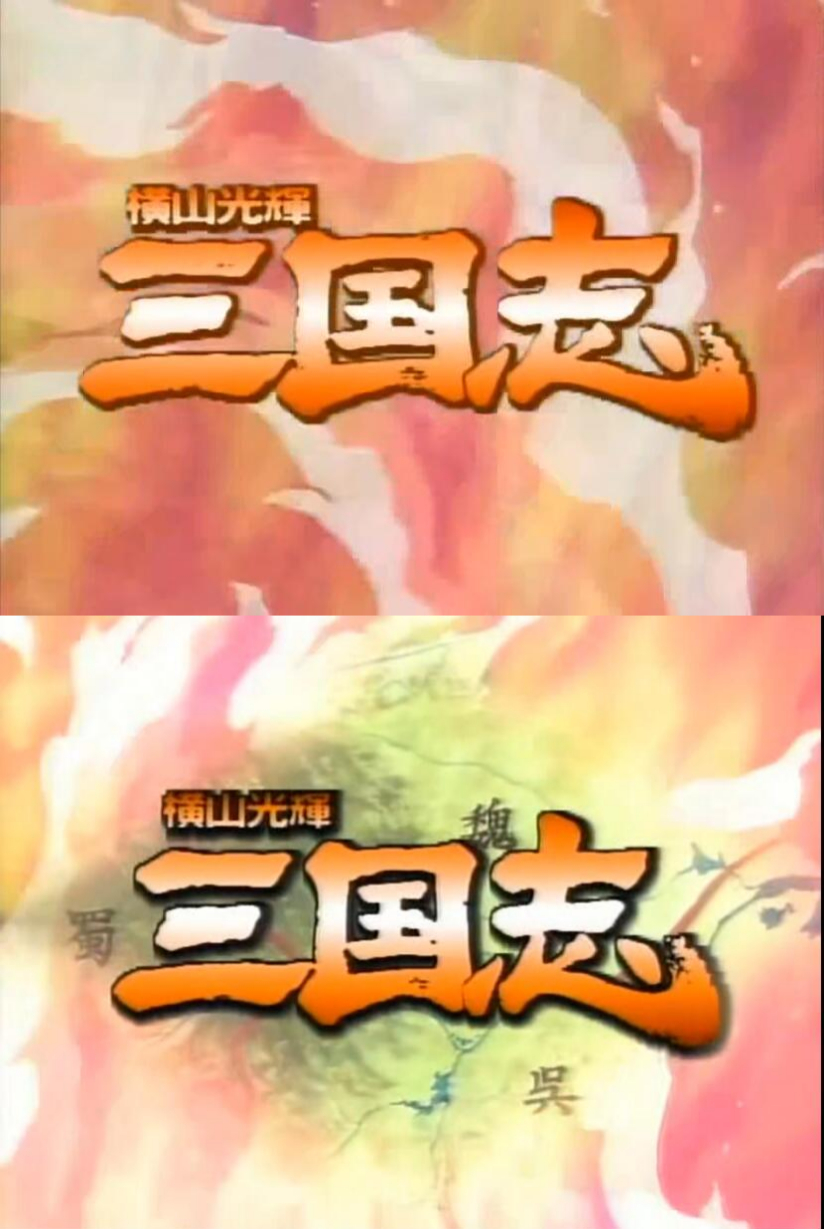
The title of "The History of the Three Kingdoms of Hengshan Glory"
Before Yokoyama Mitsuteru, there was a novel version of The History of the Three Kingdoms, which was popular in Japan. It is not The Romance of the Three Kingdoms edited by Luo Guanzhong and reviewed by Mao Lun and Mao Zonggang, let alone The History of the Three Kingdoms by Chen Shou, but a novel by Yoshikawa Eiji. Although the story structure of Ji Chuan’s The Three Kingdoms is similar to the Romance of the Three Kingdoms and Hengshan’s The Three Kingdoms, the interpretation angle is completely different. Ji Chuan’s morality is completely Japanese. Different from China culture, which stresses "Tang-Wu Revolution, obeying heaven and responding to people" and "princes and princes will be alike, and they would rather have seeds", the Japanese stress on identifying with the nobility of descent. Mother Liu told Liu Bei: "To trace back to an earlier ancestor, it is the authentic lineage of Liu Sheng, the king of Zhongshan Jing, a great man!" You are the great-grandson of Jingdi. What flows in your body is the blood of the emperor who once unified China. " Guan Yu and Zhang Fei, two younger brothers, followed because of Liu Bei’s royal lineage. "It must be the descendants of Emperor Jing of the Han Dynasty. Zhang Fei and Guan Yu are now convinced. "
The characters of the Three Kingdoms in The Tales of the Glory of Hengshan are vividly portrayed and deeply rooted in people’s hearts. Liu Bei is chivalrous and kind-hearted, Guan Yu is loyal and courageous, Zhang Fei is coarse and detailed, Zhao Yun is broad and heavy, and Cao Cao is treacherous and domineering. Compared with Yoshikawa Eiji, Yokoyama Mitsuteru obviously knows more about China culture and is completely unaffected by Japanese traditional values. He fully accepted the original idea of The Romance of The Three Kingdoms, and highlighted Liu Bei’s benevolence and humanity. Liu Bei’s benevolence is well-known, and Guan Zhang became sworn in with Taoyuan because of his admiration for benevolence. A group of young people who lost their families because of the Yellow Scarf Rebellion also admired Liu Bei and became his earliest trilogy.
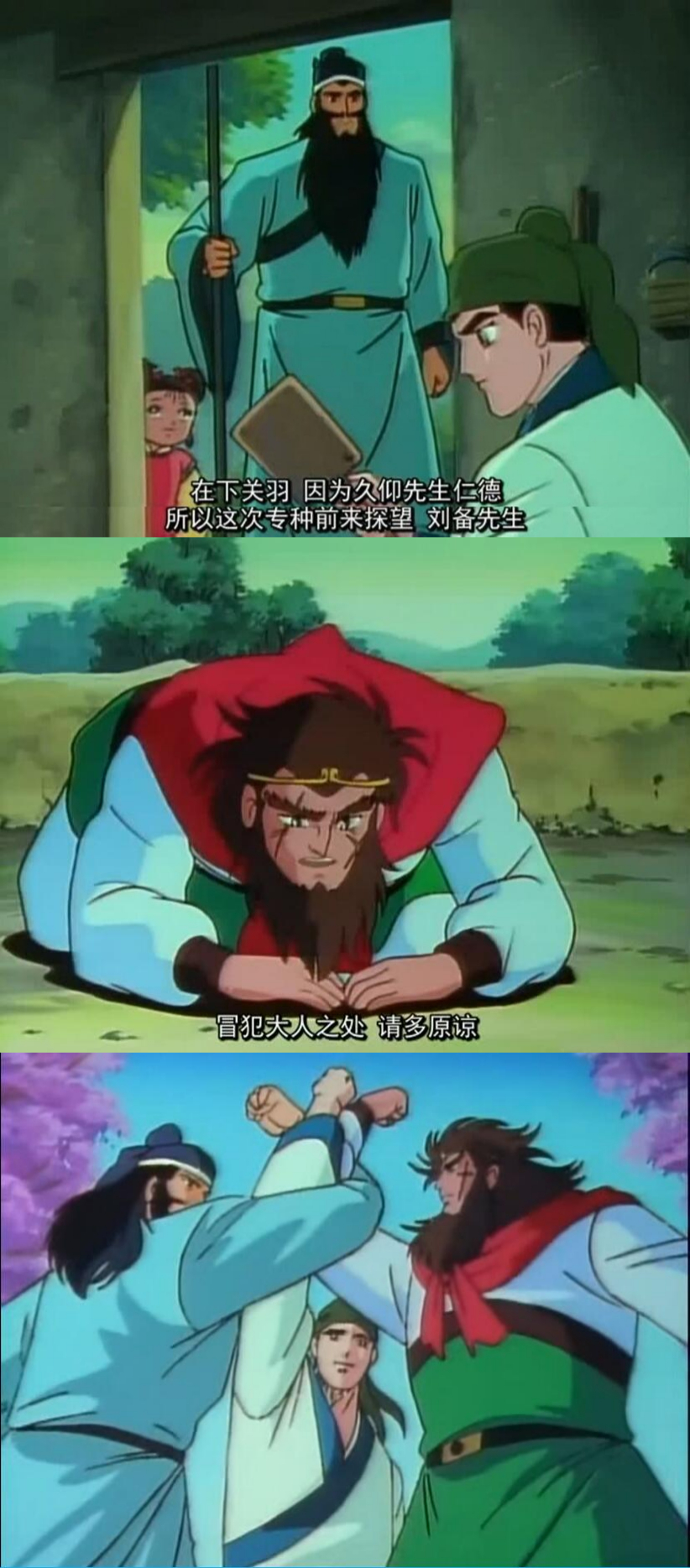
Taoyuan Sanjieyi admired Liu Bei Rende because of Guan Zhang.
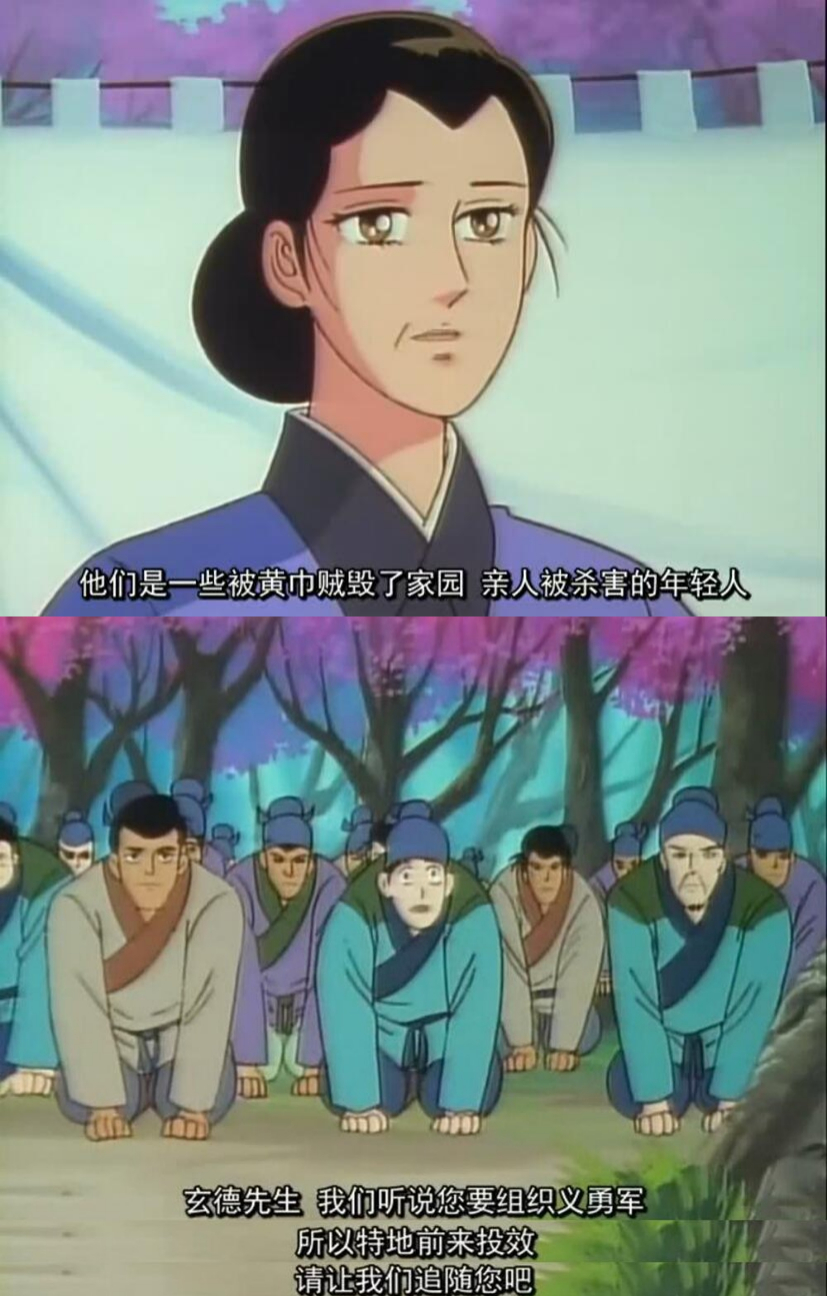
Volunteers were founded because they admired Liu Bei Rende.
Cartoon stories are basically loyal to comics, and there are many additions and deletions. Stories such as "Sun Shi captured Wujun" or "Shouchun crusaded against Yuan Shu" were omitted; The deaths of Gongsun Zan and Yuan Shu are just narration. The same traitor, Dong Zhuo’s position is Xiangguo, Cao Cao’s position is Prime Minister, and the animation was unified as Prime Minister from the beginning. Several unique roles of women and children appeared in the animated version. Female characters and female scenes have been greatly increased. The clever sister Zhuge Liang appeared, and Da Qiao, Xiao Qiao and others also performed brilliantly.
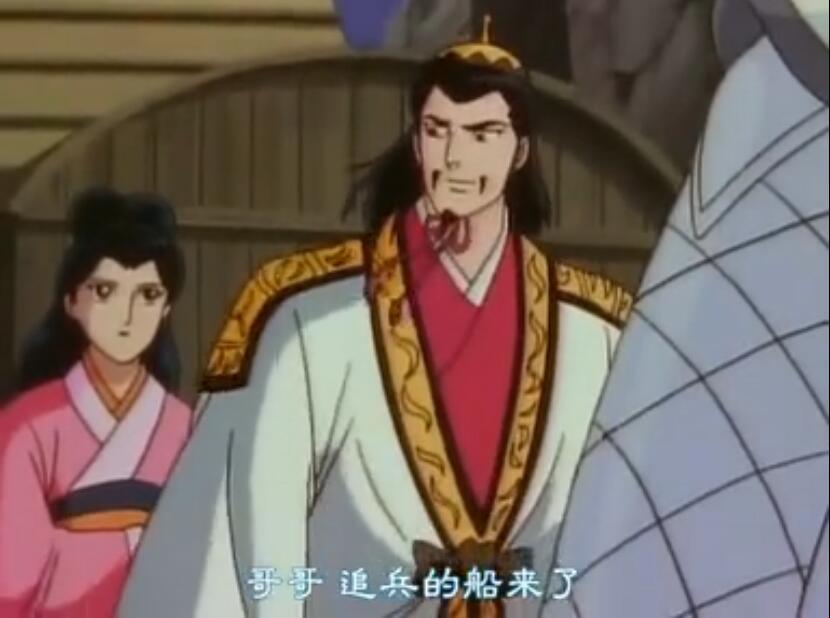
Sister Zhuge Liang
Cartoons have supplemented the parts that the original Romance of the Three Kingdoms failed to describe. For the story of Lu Bu’s quick surrender to Dong Zhuo because of the red hare, Yokoyama Mitsuteru creatively supplemented Dong Zhuo’s story that only a red hare could escape Lu Bu’s pursuit, which triggered the plot of Lu Bu’s interest in the red hare.
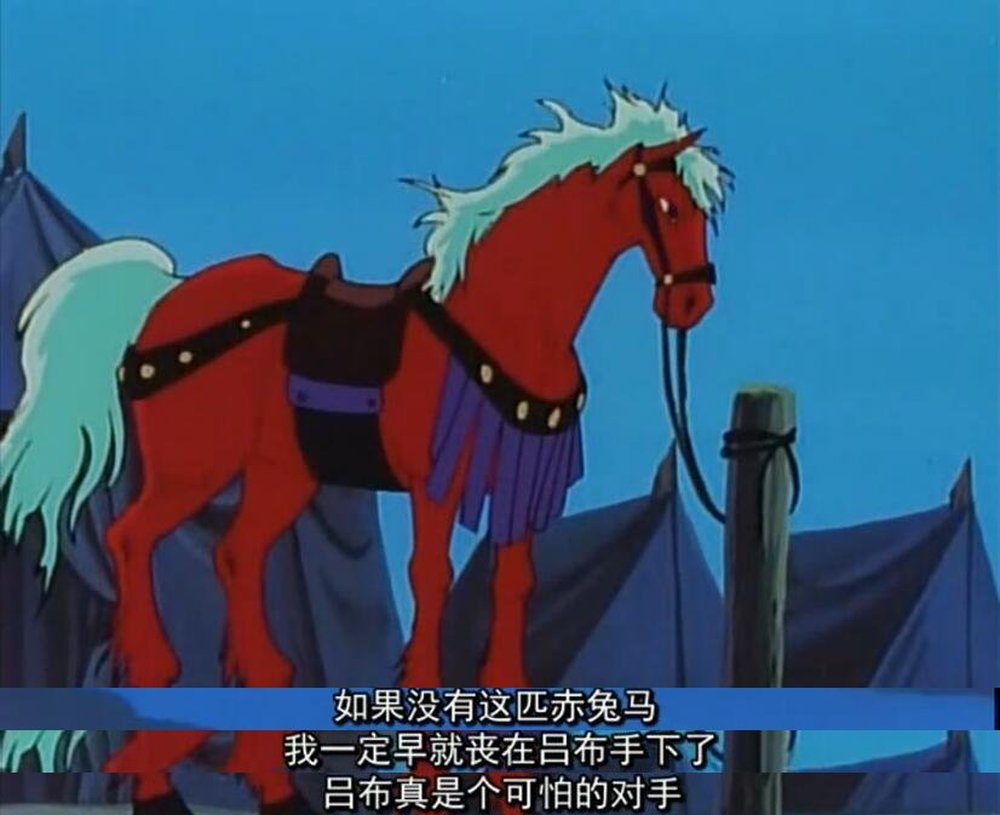
Dong Zhuo escaped Lyu3 bu4 by Red Rabbit.
Cartoons enrich the lives of important people. Zhao Yunceng had successively served in Yuan Shao and Gongsun Zan’s army. The animation adds Zhao Yun to witness Yuan Shao stealing Jizhou and killing innocent people. Gongsun Zan was saved by Zhao Yun, but he didn’t trust Zhao Yun. He was completely disloyal. Because Liu Bei and Gongsun Zan were old friends, he took a small amount of military forces to help Gongsun Zan. This also fully explains why Zhao Yun was completely convinced when he met Liu Bei.
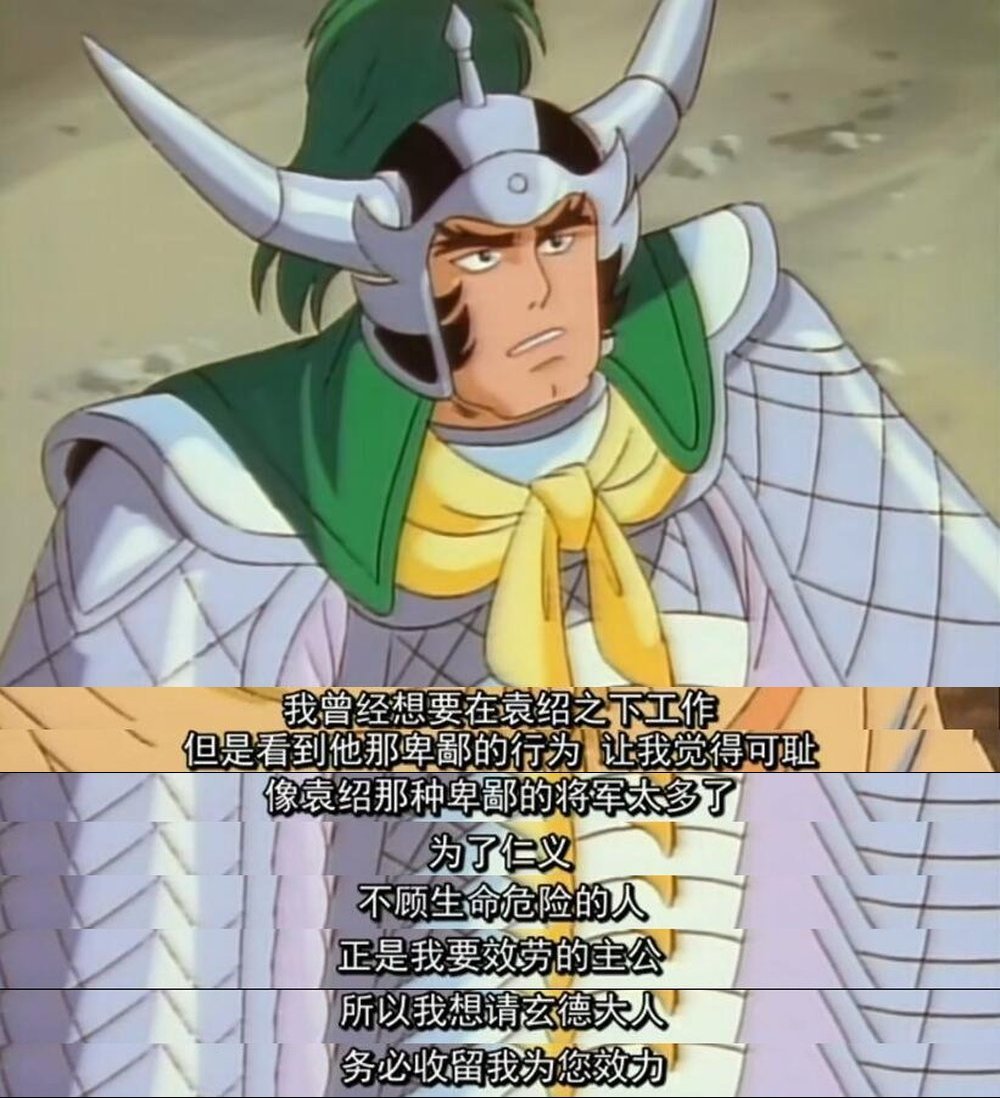
Zhaoyun has been looking for the benevolent Lord.
The cartoon highlights the word "benevolence". Liu Bei not only abides by benevolence and righteousness, but also teaches others to follow this Confucian moral standard. He taught Zhao Yun that if leaving Gongsun Zan at this time is not a benevolent act, it will violate the word "benevolence and righteousness".
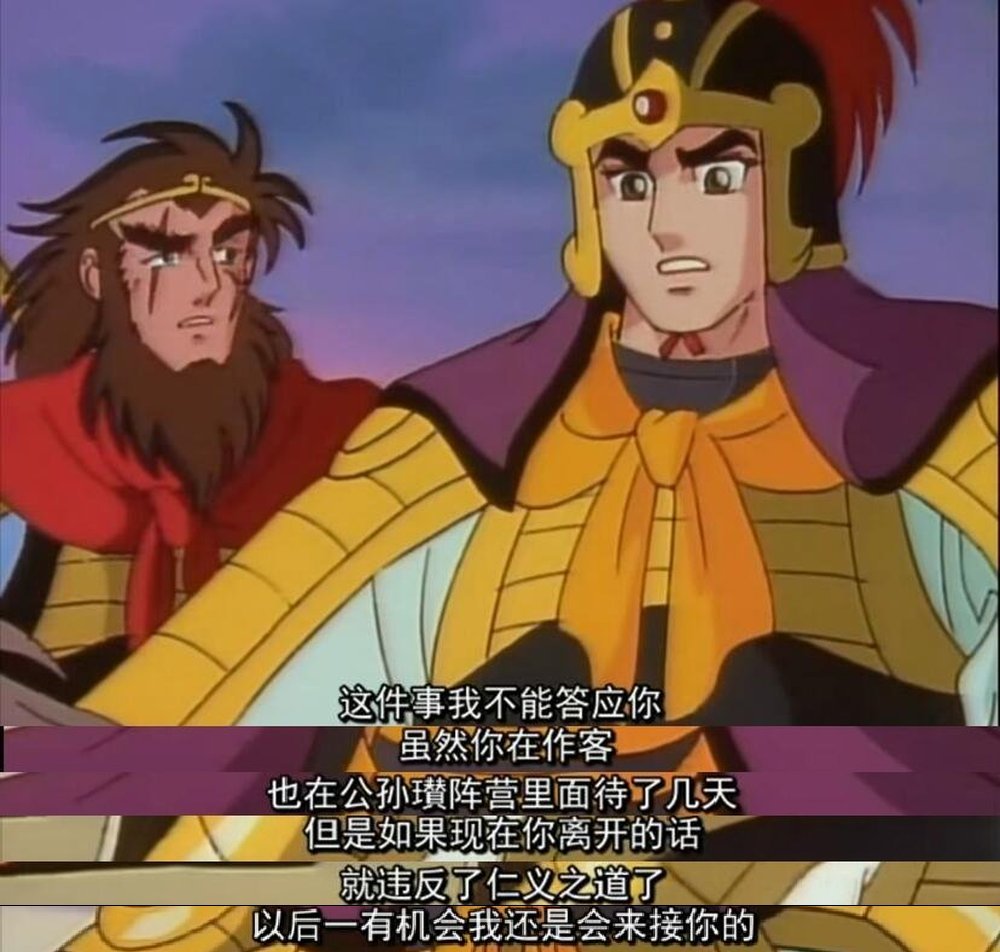
Liu Bei refused Zhao Yun’s first flight because of benevolence and righteousness.
Zhuge Liang is the second protagonist of The Romance of Three Kingdoms after Liu Bei. Cartoons complement Zhuge Liang’s life experience in more detail. Zhuge Xuan’s second son was born in the total solar eclipse. After birth, the sky was bright. Zhuge Jue thinks this is an auspicious son, named Zhuge Liang and Kong Ming. He believes that the dark troubled times will be worn out by a beam of light.
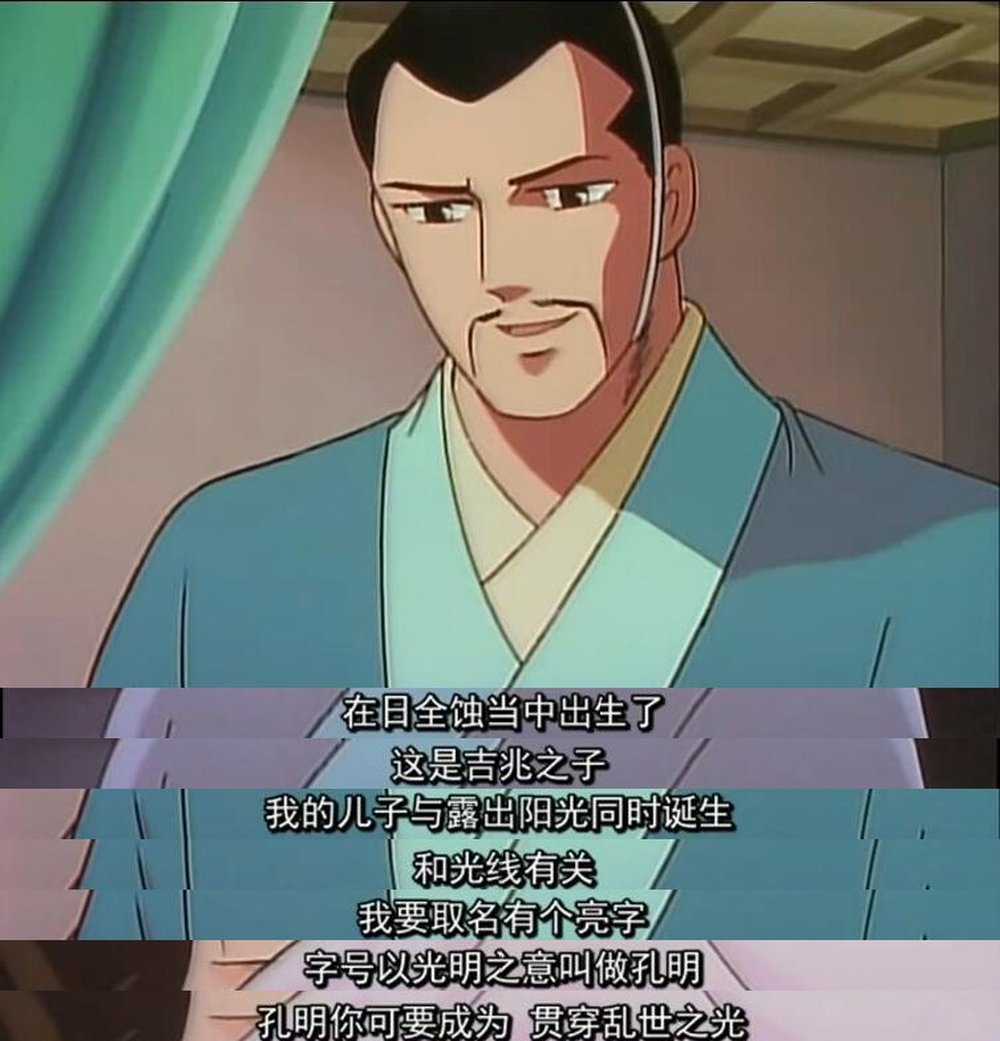
The origin of Zhuge Liang’s name
In the autumn of the fourth year of Chuping (193), Cao Cao took all his grievances out on Xuzhou civilians because his father was killed, and led an army to attack Xuzhou. The following spring, Cao Cao returned to the army and carried out another massacre. "The Biography of Tao Qian in the Later Han Dynasty" records that Cao Cao created a brutal massacre in Xuzhou. "Whoever killed hundreds of thousands of men and women, there were no chickens and dogs, and Surabaya did not flow, so it was a five-county fort, and there was no trace of it."
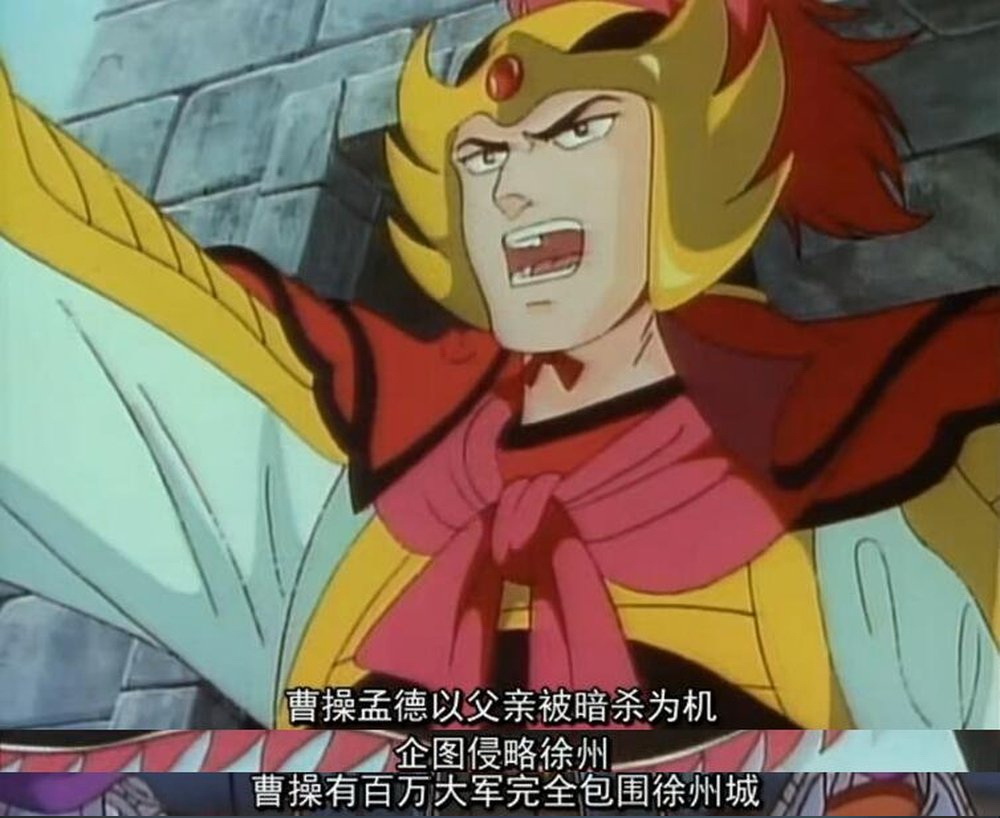
Cao Cao attacked Xuzhou
Zhuge Liang’s hometown Langya County is a part of Xuzhou. Tao Qian, the secretariat of Xuzhou, sent letters of help to various governors; And the governors of all walks of life have nothing to do with themselves, and no one has come to rescue them. Only Liu Bei, who has only 3,000 troops, is duty-bound to come to support and fight against Cao Cao.
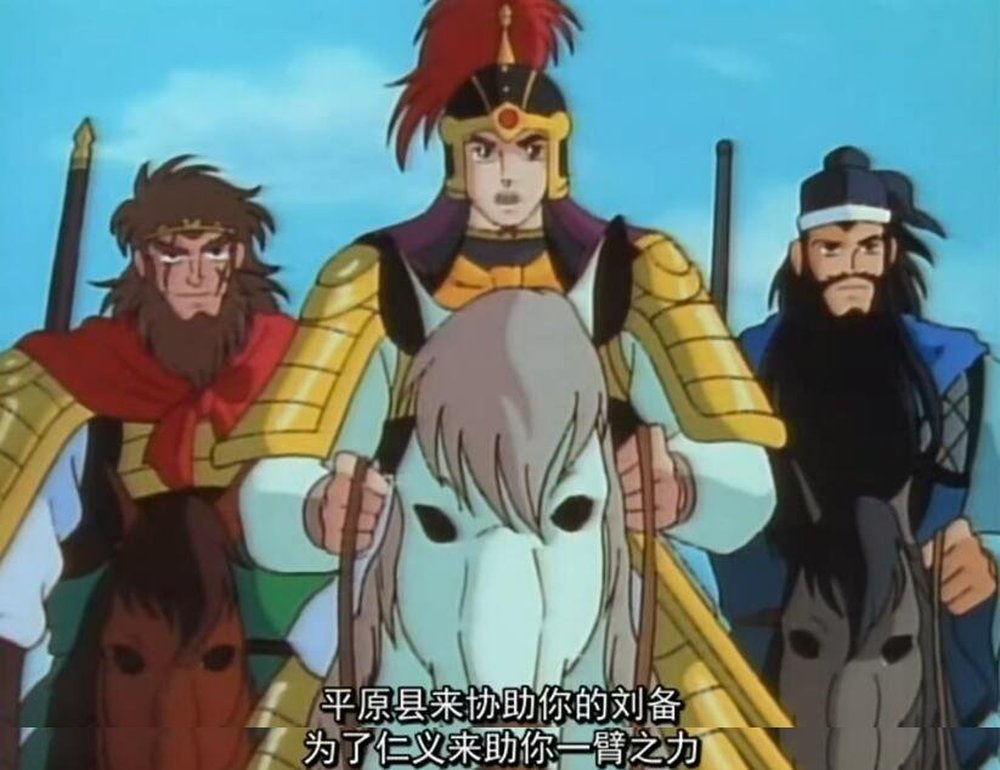
Liu Beiyi saves Tao Qian.
The intersection of Cao Cao, Liu Bei and young Zhuge Liang is not clearly shown in the history book The History of the Three Kingdoms or the novel The Romance of the Three Kingdoms. Yokoyama Mitsuteru, on the other hand, made use of historical documents and showed it directly through TV pictures. Liu Bei’s noble quality of benevolence and righteousness left a deep impression on Zhuge Liang, who was only 13 years old at that time. And Cao Cao should have left a cruel impression on Zhuge Liang. Liu Bei saved the young Zhuge Liang; Zhuge Liang inherited Liu Bei’s lifelong ambition.
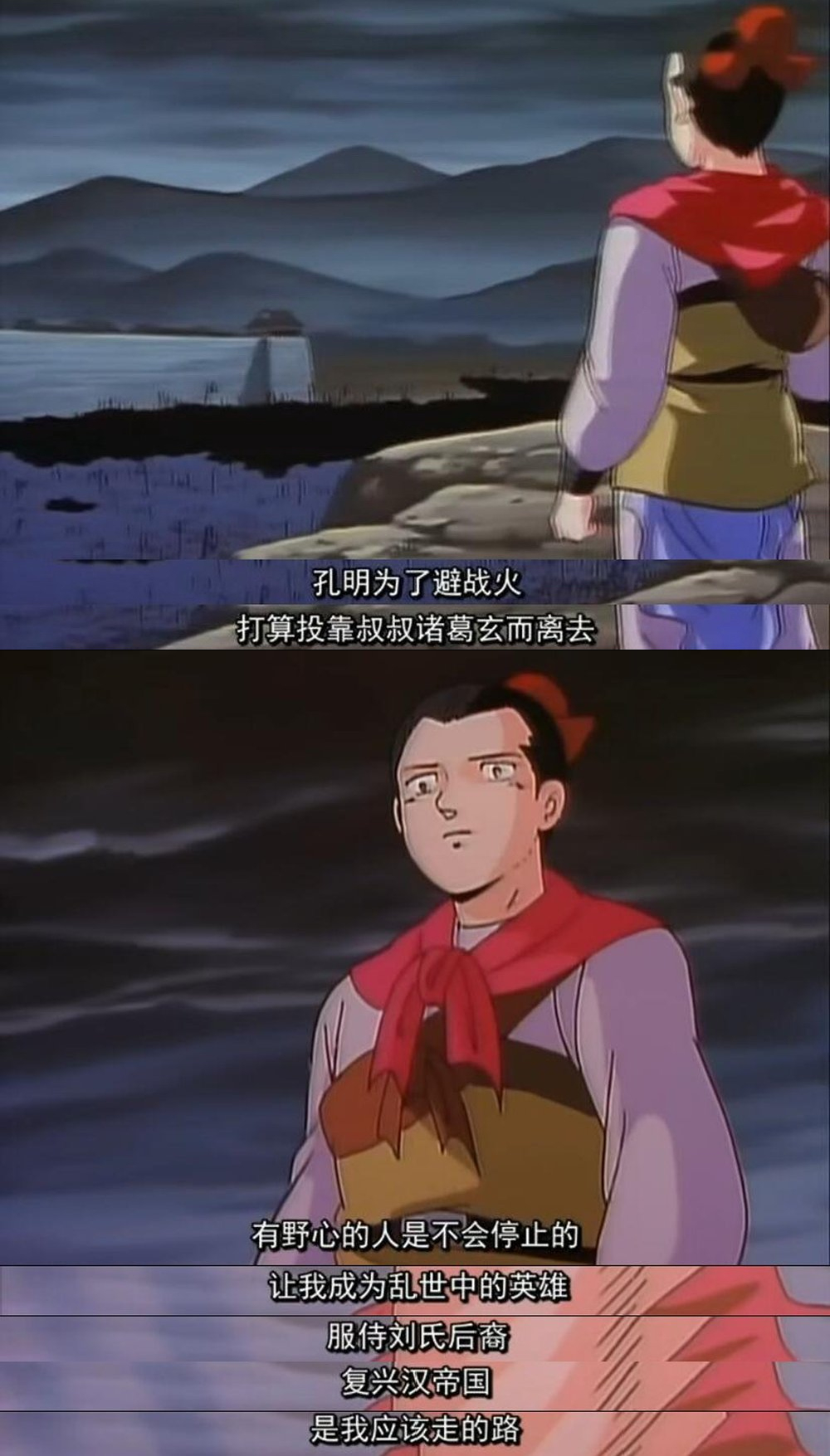
Young Zhuge Liang was the witness of Cao Cao’s slaughter of Xuzhou and Liu Bei’s rescue of Xuzhou.
The endings of some negative characters are also impressive, and China’s values of retribution are also reflected in the animation many times. For example, in the form of narration, the animation satirizes Cai Mao’s death by Zhou Yu’s double agent, which is self-inflicted.
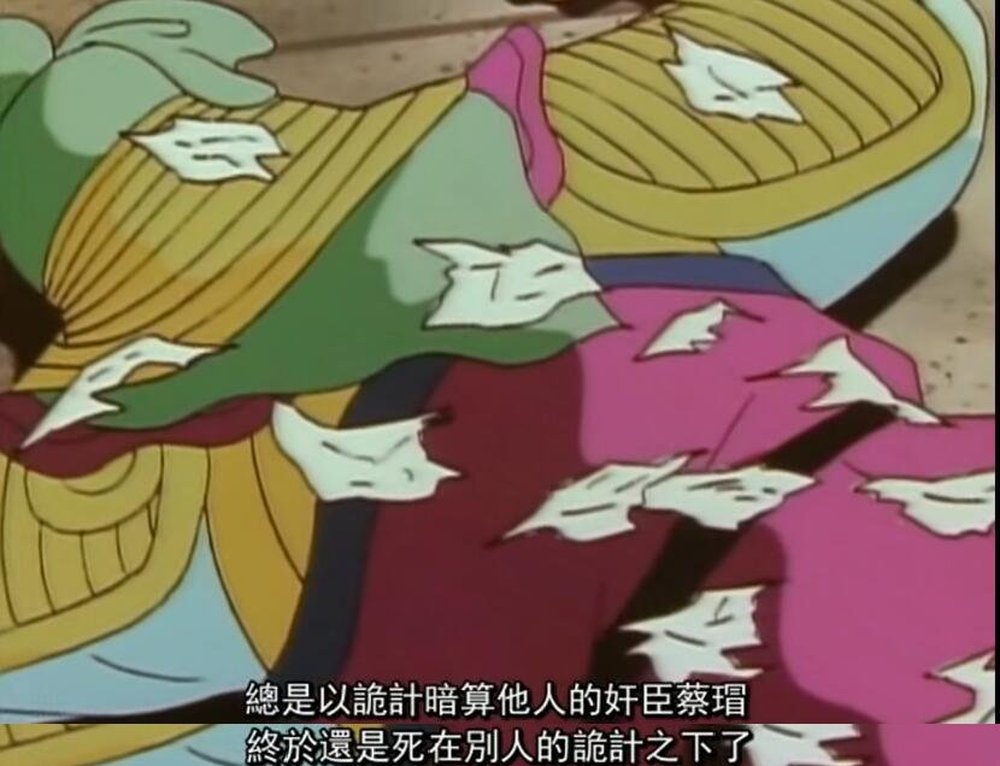
Cai Mao’s retribution is not good
As a modern work, The Glorious History of the Three Kingdoms in Hengshan is not entirely based on The Romance of the Three Kingdoms. In the original work, Zhang Bao’s sorcery and Zhuge Liang’s whistling skills are regarded as superhuman phenomena. Cartoons are all explained by modern science, such as Liu Bei cracking Zhang Bao’s witchcraft and Zhuge Liang borrowing from the east wind.
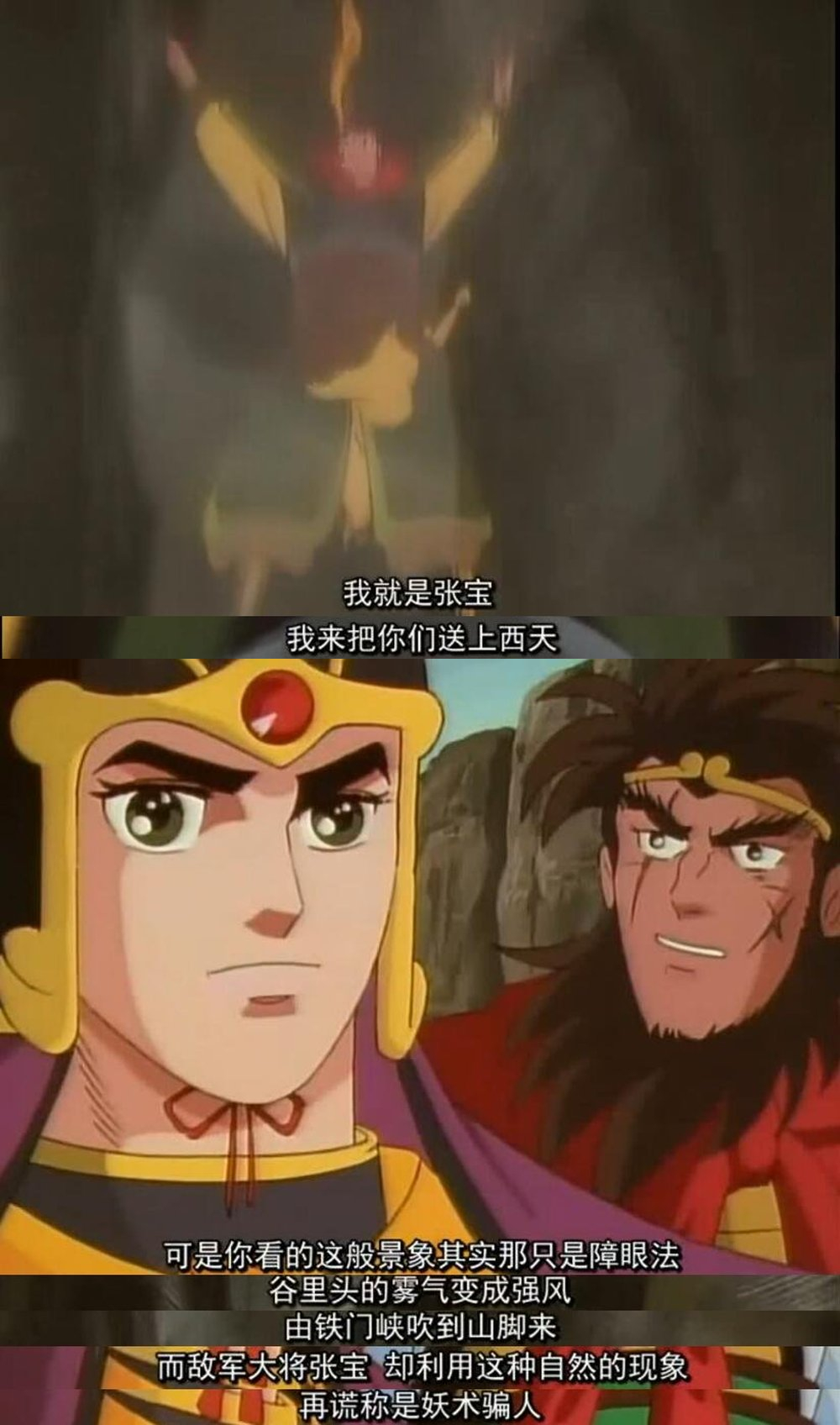
Zhang Bao’s witchcraft restoration
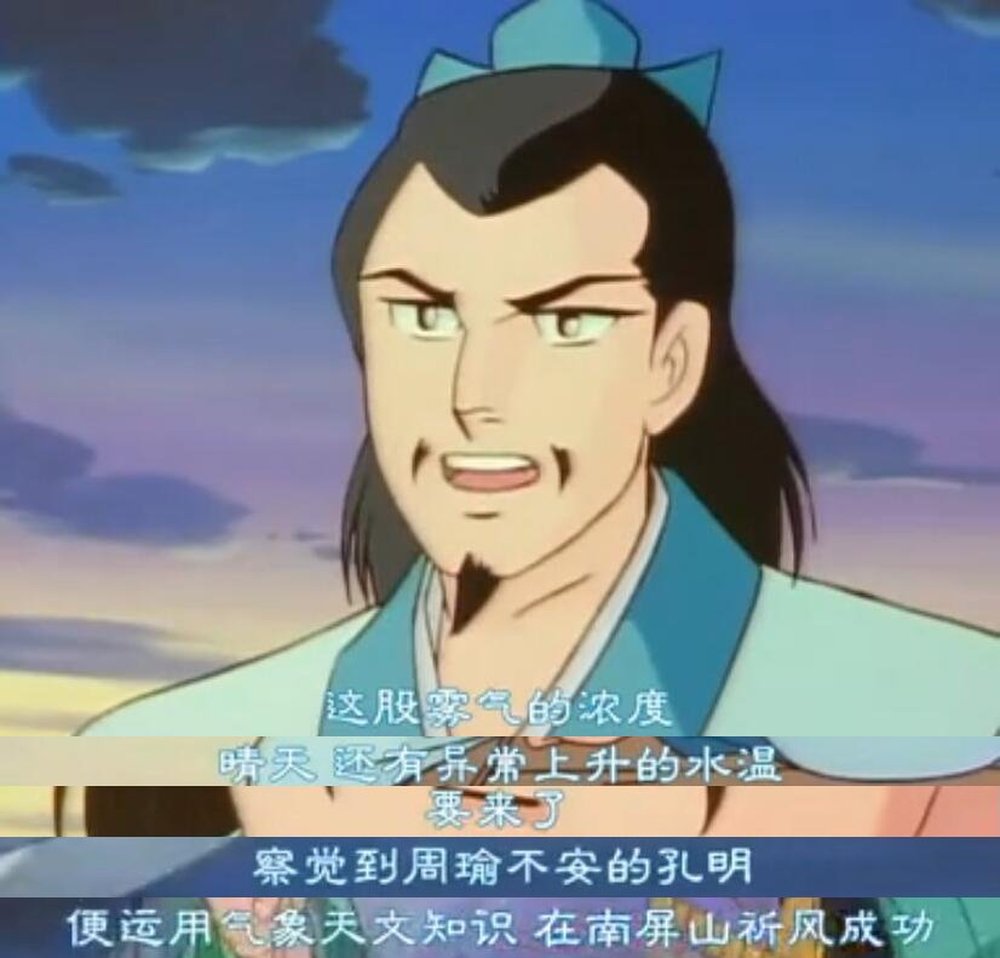
Zhuge Liang borrowed the east wind by scientific observation.
There are 60 volumes of comics in the History of the Three Kingdoms, which started from the three vows in Taoyuan and ended with the surrender of the late master. Cartoons are only equivalent to the first 26 volumes of comics. They were produced in Battle of Red Cliffs, with a total of 47 episodes. OP1 from Episode 1 to Episode 32 is dedicated to Liu Bei’s River of Time. The lyrics reflect the hero’s ideal that "one day he will be reborn, and no one can stop, and the river of time continues". At the beginning of episode 33, "Yuan Zhi recommended Zhuge", Zhuge Liang walked into the foreground. OP2 "Don’t Look Back" is dedicated to Zhuge Liang, which contains the allusions of Zhuge Liang’s name, "firmly believe that your only dream … is transformed into the light of crossing".
Cartoons were introduced to Chinese mainland shortly after their birth. Chinese mainland is playing the dubbing version of Taiwan Province. This version replaces the songs and lyrics of the theme song. In 1980s and 1990s, Taiwanese cartoons were often famous for their low translation level. However, the level of this new theme song is quite high. The song was sung in children’s voices. "Three people in Taoyuan became sworn friends and stood firm in troubled times. Save the whole world, and the top gun will rise from the ground … Divide the world into three kingdoms, and strive for the future generations. How many heroes and spirits have entered the dust in Wuzhangyuan, the White Emperor of Chibi. " This impressive lyric includes the history of Taoyuan’s loyalty, the three-thirds of the world to the fall of the autumn stars in Wuzhangyuan, and reflects the feelings of saving the world of Liu Bei and Zhuge Liang.
It is worth mentioning that in 1991, when the cartoon was broadcast, Yokoyama Mitsuteru was awarded the 20th Excellent Works Award of the Japanese Cartoonist Association for his "The History of the Three Kingdoms". In the second half of 30 years later, Xinxing Publishing House brought this masterpiece to China. This most classic comic book of the Three Kingdoms has finally returned to the original hometown.
[Specially published by Shanghai Literature and Art Review Special Fund]