The thing that the Suez Canal "blocked ship" has just been unblocked and "blocked" is coming again.
Stranded for nearly six days, the fate of the 220,000-ton ship "Ever Given" not only touched the hearts of many people, but also affected the economy of the whole world. Now, the long wait seems to have finally come to an end.

△ On the 29th local time, the "Changci" resumed sailing under the tug (picture from Suez Canal Authority).
On the afternoon of March 29th, local time, with the efforts of the rescue team, the freighter Changci, which had blocked the Suez Canal waterway since the 23rd, was successfully jettisoned and towed to Dagu Lake for technical inspection, and the Suez Canal waterway resumed traffic.

△ As of 18: 00 Beijing time on the 30 th, ships waiting for navigation at both ends of the canal (picture from the ship tracking website "VesselFinder")
Egypt’s Suez Canal Authority said on the 30th that more than 100 cargo ships have sailed into the Suez Canal, which will operate 24 hours a day after the canal is dredged, and more than 400 ships stranded in the canal will pass completely within three to four days.
Congestion for 6 days, many parties face huge losses.
The Suez Canal connects the Red Sea and the Mediterranean Sea, and it is an important international shipping channel connecting Europe, Asia and Africa. The "Changci" stranded for six days means that it will face huge losses for canal management departments, ships waiting for navigation, retailers waiting for goods, etc.
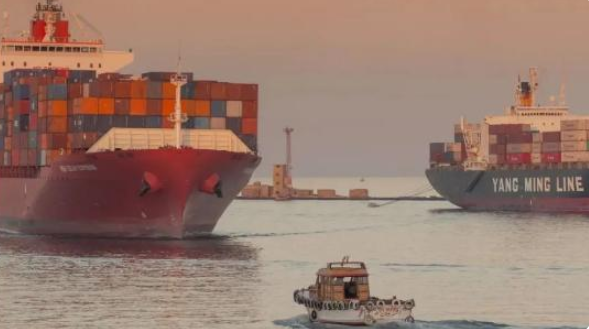
The Suez Canal was blocked, and the daily toll loss of the Egyptian government reached $12 million to $14 million.
For giant oil tankers waiting for customs clearance at the entrance of the Suez Canal, each ship has to pay a parking fee of 30,000 to 80,000 dollars per day.

In addition, at least 20 ships stranded on the sea are full of livestock, and thousands of cattle and sheep are on board. If the feed is exhausted and the ship cannot dock, these animals are likely to face hunger, dehydration and injury.

After the "Changci" was successfully rescued, the party responsible for the accident had to pay the rescue fee to the Dutch Schmidt Salvage Company, which was responsible for the rescue. It is estimated that it may be as high as tens of millions of dollars.

△ The stranded "Changci" and the operating rescue boat (picture from Suez Canal Authority)
In addition, during the blocking of the Suez Canal, dozens of ships chose an alternative route to bypass the Cape of Good Hope in Africa. Compared with passing through the Suez Canal, the alternative route will take about two weeks longer and pay hundreds of thousands of dollars in fuel and other expenses.

The latest research by Allianz, a German insurance company, shows that the Suez Canal blockade caused by grounding may cause global trade to lose 6 billion to 10 billion US dollars every day.

△ Image from Allianz Insurance Company official website
In addition, a large number of insurance claims caused by transportation delays put pressure on financial institutions engaged in marine insurance, which may lead to turmoil in the reinsurance field.
The end of congestion may usher in a long "claim drama"
From the cost of rescue to the cost of cargo delay, who will pay for the huge losses caused by the "blocking of ships" in the Suez Canal?
Taiwan, China Evergreen Shipping, the operator of "Changci": Compensation is the responsibility of the shipowner.
On the issue of compensation, Zhang Yanyi, chairman of Taiwan Province Evergreen Shipping Company, the leasing operator of "Changci", responded on the 25th that the accident compensation was the responsibility of the shipowner, and the accident was a loss of goodwill for Evergreen, and it might be possible to claim compensation from the Japanese side. It is said that the compensation was as high as several million dollars.

On the evening of March 29th, Evergreen Shipping announced in official website that it would coordinate with the shipowner to handle the follow-up matters after completing the accident investigation report with the shipowner and other relevant institutions.
Japan Zhengrong Steamboat Company, the owner of "Changci": Take part of the responsibility.
On March 27th, the owner of the freighter, Japan Zhengrong Steamboat Company, issued a statement apologizing for the impact of the accident on other transportation enterprises, and said that the company did bear part of the responsibility, but Evergreen Shipping also had to negotiate with the shippers.

△ On 26th, Zhengrong Steamboat Company held a press conference and apologized for blocking the waterway.
"Sankei Shimbun" reported on the 30th that the Suez Canal Authority is likely to sue Zhengrong Steamboat Company in Egypt, demanding compensation for related losses. The freighter also caused direct damage to the banks of the canal, and the repair cost may also be borne by Zhengrong.
The underwriting unit of the shipowner Changci (British Shipowners Mutual Insurance Association) is a member of P&I Club, so Japanese shipowners may get a total liability insurance of $3.1 billion from this group. However, industry insiders said that it is not clear whether this is enough to make up for the loss of hundreds of ships stuck in the canal.
Suez Canal Authority: No claim for compensation pending investigation results.
Labille, chairman of Suez Canal Authority, said recently that the party responsible for the accident will be determined after the investigation. Regarding the claim, the Suez Canal authorities responded that before the accident investigation results were released, the Suez Canal authorities would not make relevant claims for the time being, but would reserve the right to claim compensation from the responsible party.

△ The head of the Suez Canal Authority in Egypt discussed rescue measures (picture from Associated Press)
Mamich, adviser to the Egyptian President on seaport and Suez Canal, said on the 29th that Egypt has the right to claim compensation from the Japanese shipowners of the stranded freighter.
It is difficult to determine the responsibility for delaying the loss of global trade
India’s Livemint website said on the 27th that most of the hundreds of ships waiting to pass through the canal may not have extended insurance coverage for the goods. According to industry practice, the owner needs to buy insurance to prevent the risk of damage, rather than relying on the shipowner to provide insurance for his goods. However, the standard freight policy protects the loss or damage of the goods, not the cost of delay.
Ships that bypass the Cape of Good Hope will not be able to claim for the extra cost and time involved, because it is considered as an "economic loss" and usually cannot be compensated, which means that the charterer will bear certain expenses.

According to American media, a drama of shirking responsibility will be staged: the owners of the cargo on the "Changci" and other ships will seek compensation from their respective insurance companies, which will claim compensation from the Japanese Zhengrong Steamboat Company, the owner of the "Changci", and the owner will seek protection from its insurance company.
Insurance professionals predict that this will produce a large number of lawsuits, and I don’t know what the odds are.
Producer Tang Yi
Producer Zhao Xinyu?
Editor Lei Ying